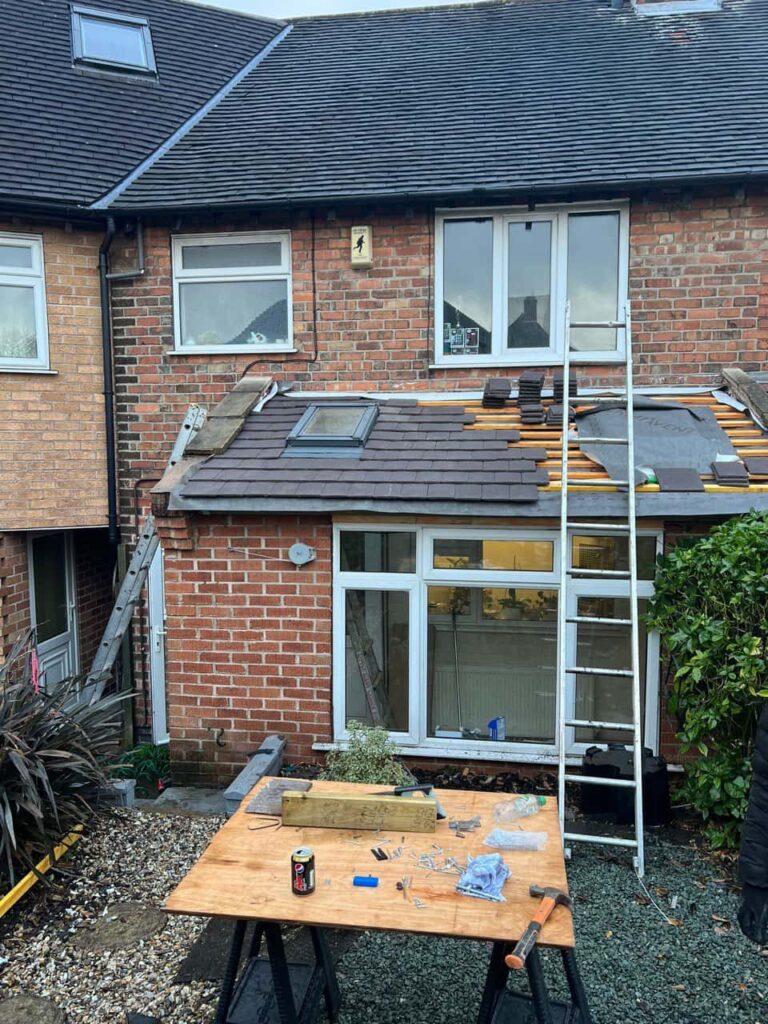
Strong winds and severe weather can put considerable pressure on a roof. Tiles can become displaced, flashing may loosen and damaged areas can allow rainwater to enter the property. Some problems are immediately visible, while others may only become apparent when dampness or leaks develop later.
For homeowners in Countesthorpe, Leicestershire, checking the condition of the roof after severe weather can help identify damage early and prevent a small defect from becoming a more extensive roofing problem.
Common Types of Storm Damage to Roofs
Storm conditions can affect different parts of a roof depending on its age, construction and existing condition. Common problems include:
- Slipped or missing roof tiles
- Cracked or broken tiles and slates
- Damaged ridge or hip tiles
- Loose or damaged flashing
- Displaced roof coverings
- Blocked or damaged gutters and downpipes
- Damage around roof junctions and other vulnerable areas
Even when only one tile appears to have moved, the surrounding area should be checked to determine whether there is an underlying issue.
Check Your Roof Safely After Severe Weather
After strong winds, it can be useful to inspect the roof from ground level for obvious signs of damage. Look for missing tiles, unusual gaps, displaced sections or debris around the property.
Avoid climbing onto the roof to investigate damage yourself. Wet surfaces, loose tiles and unstable areas can make a roof particularly hazardous following severe weather.
If you notice visible damage or suspect that water has entered the property, arranging a professional inspection is a safer way to establish the condition of the roof.
What to Do If Water Is Coming In
A damaged roof can allow rainwater to enter through relatively small gaps. Water may appear as staining on ceilings or walls, dampness in the loft or visible drips during rainfall.
If you notice a leak, identify the affected area from inside the property if it is safe to do so and move belongings away from the immediate area. Avoid attempting temporary roof repairs from outside during wet or windy conditions.
A professional roofer can investigate the source of the water ingress and determine which part of the roof requires attention.
Repairing Slipped or Missing Tiles
Roof tiles are particularly vulnerable to strong winds. Fixings can loosen or tiles may be displaced when the roof is exposed to repeated gusts.
Where a tile remains in good condition, it may be possible to reposition and secure it. Cracked or broken tiles may need to be replaced instead.
The surrounding tiles and fixings should also be checked, as multiple displaced tiles may indicate a wider problem rather than an isolated defect.
Checking Flashing and Roof Junctions
Flashing protects areas where different parts of the roof meet, including around chimneys and other junctions. Strong winds can loosen flashing or expose gaps in previously sealed areas.
Damaged flashing can create a route for rainwater to enter beneath the roof covering. Repairs may involve securing, resealing or replacing defective sections, depending on their condition.
Because water can travel beneath roofing materials, a leak may appear some distance from the actual point of entry.
Gutters and Downpipes After Storms
Storms can also leave gutters and downpipes blocked with leaves, moss and roof debris. Damaged or displaced guttering may prevent rainwater from draining correctly.
Overflowing water can run against walls or roofing areas where it is not intended to collect. Checking the drainage system after severe weather can therefore be an important part of assessing the property’s external condition.
Why Prompt Roof Repairs Matter
Leaving storm damage unattended can allow further weather exposure to affect the damaged area. A small gap in the roof covering can become a route for repeated water ingress, while a loose tile may move further during subsequent windy conditions.
Prompt assessment allows the actual cause of the problem to be identified and suitable repairs to be carried out before additional damage develops.
Professional Storm Damage Roof Repairs in Countesthorpe
Countesthorpe Roofing Repairs provides professional roof repair services in Countesthorpe, Leicestershire, for properties affected by wind and storm damage.
The roof can be inspected for displaced tiles, damaged slates, defective flashing, ridge tile problems and other signs of weather-related deterioration. Repairs can then be focused on the areas that require attention rather than carrying out unnecessary work.
If your roof has been affected by severe weather or you have noticed signs of damage or water ingress, contact Countesthorpe Roofing Repairs to discuss the problem and arrange an inspection.
Conclusion
Severe weather can affect several parts of a roof, from tiles and slates to flashing, ridge sections and rainwater goods. Some damage may be obvious immediately, while other problems can develop into leaks over time.
For homeowners in Countesthorpe, Leicestershire, checking for signs of storm damage and arranging professional attention when problems are identified can help protect the roof from further deterioration. Countesthorpe Roofing Repairs can assess weather-related damage and carry out the appropriate repairs to restore the condition of the roof.
Call us on: 0116 216 1796
Click here to find out more about Countesthorpe Roofing Repairs
Click here to complete our contact form and see how we can help with your roofing needs.